


SRV LABThe referral offer
Prepared forSOS Plumbing

Less busywork.
More business.

Two fractional AI engineers to help SOS book more work, simplify the office, and connect the business from the first call to the final invoice.

Your office. Your technicians. Your customers. Connected.

SOS Plumbing and Air service van outside an Inland Empire home, from the SOS website
Water heaters. Plumbing. Air.One connected operation.
AI Made Clear. Operations Made Simple.Built for your next chapter.

Great service in the field.
A smoother operation
behind it.

Water heaters, plumbing, and air all depend on the work behind the job: answering calls, scheduling technicians, ordering parts, and getting paid.

We sit with your people to understand how SOS runs today. Then we choose the highest-impact improvements together. Your priorities set the pace.

Choose the opportunities worth discussing

A fast start at Gardner.
In just two weeks.

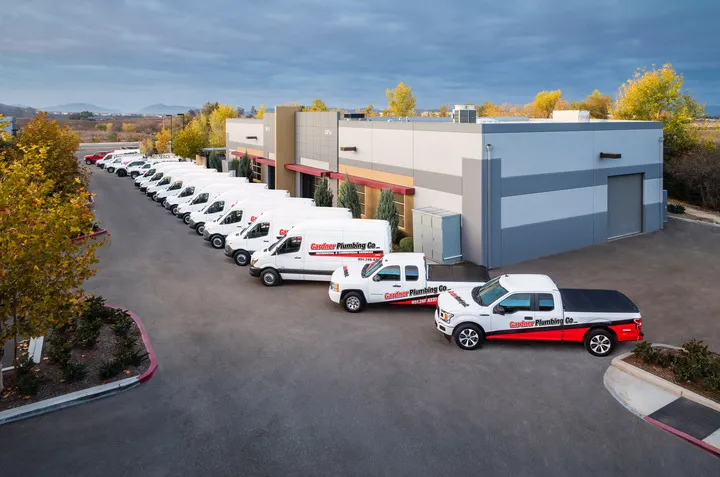
Gardner Plumbing Co. service trucks outside its facility
Gardner Plumbing, HVAC & ElectricFrom disconnected tasks to a connected operation.

The following milestones were accomplished within the first two weeks of working with GPC.

  1. Payroll bonus automation reworked and tested.Technician bonus calculations updated inside the payroll workflow.
  2. Technician onboarding mapped.The full process documented with the people who run it.
  3. Voice and text systems audited.Call handling, routing, booking, messages, and follow-up reviewed.
  4. Microsoft 365 migration kicked off.The move toward connected email, files, and accounts started.
  5. ServiceTitan connected to ChatGPT.Job data made available to an authorized team member inside AI.
  6. Payroll setup issue escalated to Intuit.Support engaged on the QuickBooks issue blocking setup.

Time back.
Room to grow.

One reported result.
Two opportunities worth building toward.

Payroll automationReported time saving

52 working days.
Back in a year.

Eight hours of manual work saved on every weekly payroll run.

416hours
returned

52 squares. 52 eight-hour working days.

$12,480annualized value of staff time

The math & context

8 hours saved × 52 weekly runs = 416 hours, equivalent to 52 eight-hour working days. At $30/hour, that is $240 per run or $12,480 in annualized staff time. This is capacity returned, not a year of realized cash savings. Payroll setup dependencies remain separate from the tested bonus automation.

Employee onboardingModeled opportunity

Welcome the person.
Lose the paperwork.

77%

less staff time
per new hire

AI voice & textModeled opportunity

A few more bookings.
A very different year.

$80k

potential added sales / year

+1 job$385
+1 job$385
+1 job$385
+1 job$385

4 more bookings a week. Repeated over 52 weeks.

Gardner figures supplied by SRV LAB, November 2026. Annualized and modeled figures are labeled above. SOS’s baseline and results will be measured separately.

Explore the connected-business roadmap

Six areas.
One connected business.

The direction of the work at Gardner.
Open an area to explore what belongs in it.

01Sales & marketingTurn demand into booked work.
  • Call center & AI booking
  • Marketing campaigns
  • Sales tools & pricebook
  • Customer follow-up
02Field operationsGive the field a better day.
  • Dispatch & scheduling
  • Quality & technician performance
  • Fleet management
  • Purchasing & inventory
03FinanceProtect cash and margin.
  • Invoicing & payments
  • Accounts receivable
  • Accounts payable & card spending
  • Payroll & bonuses
04Office & adminKeep the work moving.
  • Team communication
  • Calendar, email & files
  • Licenses & renewals
  • Contracts & document workflows
05PeopleHelp good people do great work.
  • Technician onboarding
  • Hiring & offboarding
  • Time off & benefits
  • AI training & playbooks
06IT & devicesKeep the business secure.
  • Logins & account access
  • Phones, iPads & device management
  • Microsoft 365 & self-service
  • Backups & continuity

Company AI foundation

Connected systemsShared business contextPermissions & approvalsMonitoring & reporting

A working roadmap, not a claim that every system is complete. Priorities, scope, and sequencing are agreed with the business.

What would make
the biggest difference?

Explore what we can help with. Pick a few starting points, or tell us what’s missing. We’ll decide the order together.

0priorities to discuss

Examples, not a preset scope. We confirm your systems, access, and the right solution before committing to a build. Selecting an idea does not purchase or authorize work.

Keep what works.
Connect what doesn’t.

We improve the tools you already pay for, connect approved business information to enterprise AI, and build custom software where it makes a real difference.

Meet your engineering team ↗
  1. 01

    Optimize your existing tools

    Turn on useful features. Fix the workflow before automating it.

  2. 02

    Connect your business context

    Your systems, policies, and knowledge, with access based on role.

  3. 03

    Automate and report

    Less rekeying. Clear exceptions. Visible progress and results.

  4. 04

    Engineer what’s missing

    Custom integrations, assistants, and apps for the remaining gaps.

Human approval for consequential actionsLogged activityAccess controlsOngoing monitoring

Your priorities.
Our engineering team.

Through Troy’s introduction, SOS receives a preferred rate for two fractional AI engineers, backed by SRV LAB’s strategy and delivery team.

Build phase · estimated 6 monthsSOS × SRV LAB
2fractional
AI engineers

Embedded in your workflows.
Focused on your highest-priority improvements.

Troy referral pricingPreferred monthly rateWe’ll confirm the rate and reserved capacity with you.
Let’s map the first priorities

A team that stays with the work.

  • 01
    Strategy and a shared priority list

    We listen, assess the impact, and agree on what gets built next.

  • 02
    Hands-on engineering

    Integrations, automations, assistants, dashboards, and custom tools.

  • 03
    Weekly working updates

    See what shipped, what’s next, and what needs your input.

  • 04
    Training, monitoring, and improvement

    Help your team use the system. Keep it running and make it better.

One monthly team. A clear scope.

Fractional means reserved part-time capacity, not two full-time hires. Monthly allocation, active work, support coverage, and milestones are agreed before work starts. Third-party software and AI usage are approved separately.

Build it.
Then keep it running.

We expect the initial work to take about six months with two fractional engineers. Once the agreed systems are live and stable, we review the results with you and move to a smaller ongoing team.

You approve the transition. Any additional development or extended build phase is scoped and priced together.

$2,500 / month

One fractional engineer.
Continuous system monitoring.

  • 24/7 automated monitoring and alerts
  • Maintenance of the agreed live systems
  • Issue triage and ongoing reporting

Human response hours, escalation, and included engineering capacity are agreed before the transition. This is continuous monitoring, not a dedicated engineer staffed 24/7. New projects and third-party costs are scoped separately.

Small wins now.
Bigger gains, built in stages.

You choose the priorities. We manage the dependencies and keep the work moving within the agreed capacity.

Quick wins

Remove friction early.

Alerts, reminders, simple connections, and repetitive admin. Scoped, tested, and released as they’re ready.

ChooseBuildUse
Larger projects

Make progress visible.

Payroll, onboarding, voice systems, and connected reporting. Break them into useful milestones with working demos.

MapPilotExpand
Ongoing care

Keep getting better.

Monitor the systems, fix issues, measure results, and reprioritize. After the build phase, move to the $2,500/month monitoring and maintenance plan when the systems are ready.

WatchRefineRepeat

Timing follows complexity and access, not a blanket turnaround promise. New requests enter one shared queue. We agree on any change to capacity or budget before it happens.

Let’s start with
what SOS needs most.

We’ll sit with your team, understand the work, and choose the first priorities together. Bring the messy processes. That’s where we start.

1 Listen and map the work2 Agree on priorities and scope3 Build, measure, and improve
YOUR STARTING POINT